01
The Stories We Leave Behind
Elektronisches Storytelling · Gesprochenes Wort · Ambient
Electronic soundscapes, spoken word and quiet moments shaped into stories.
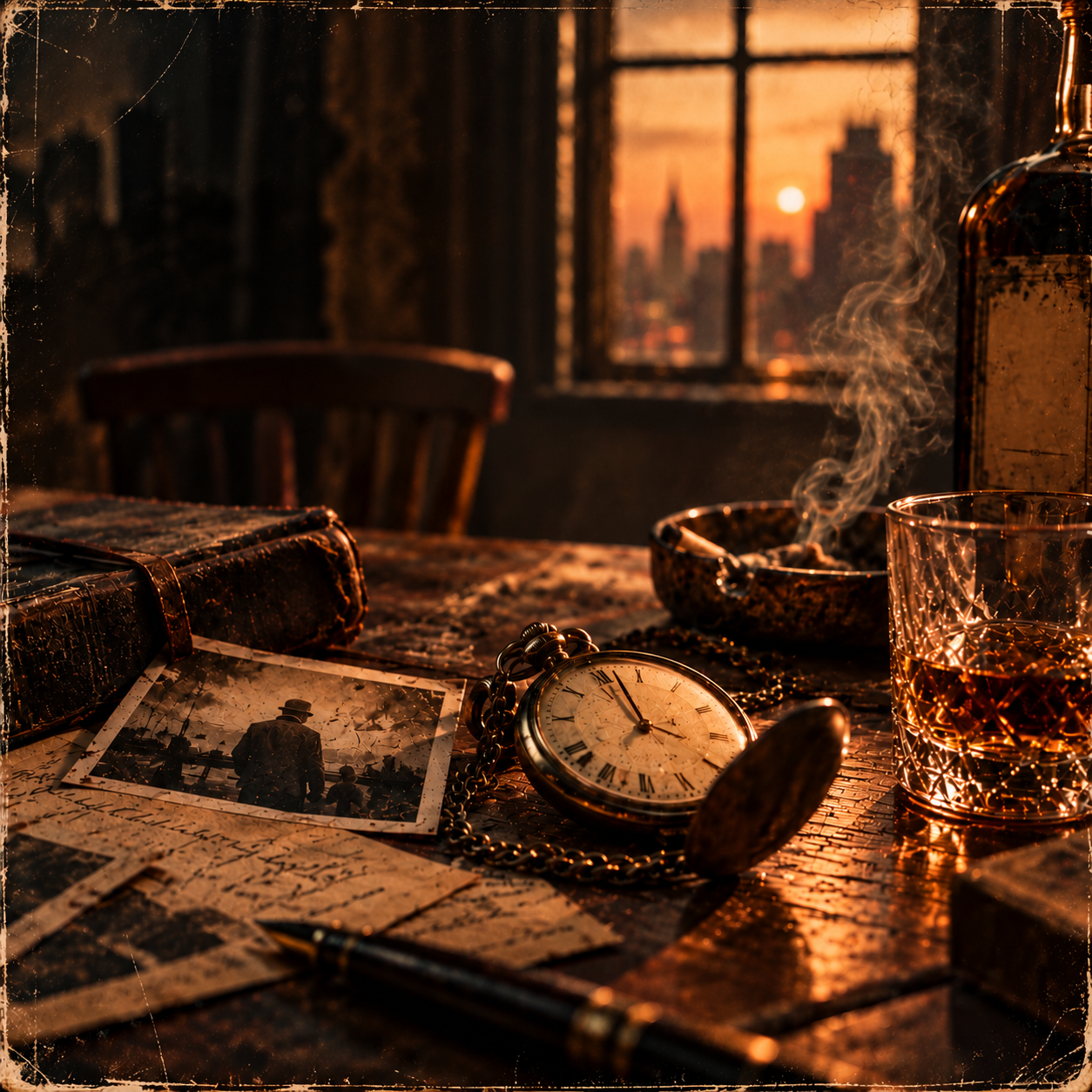
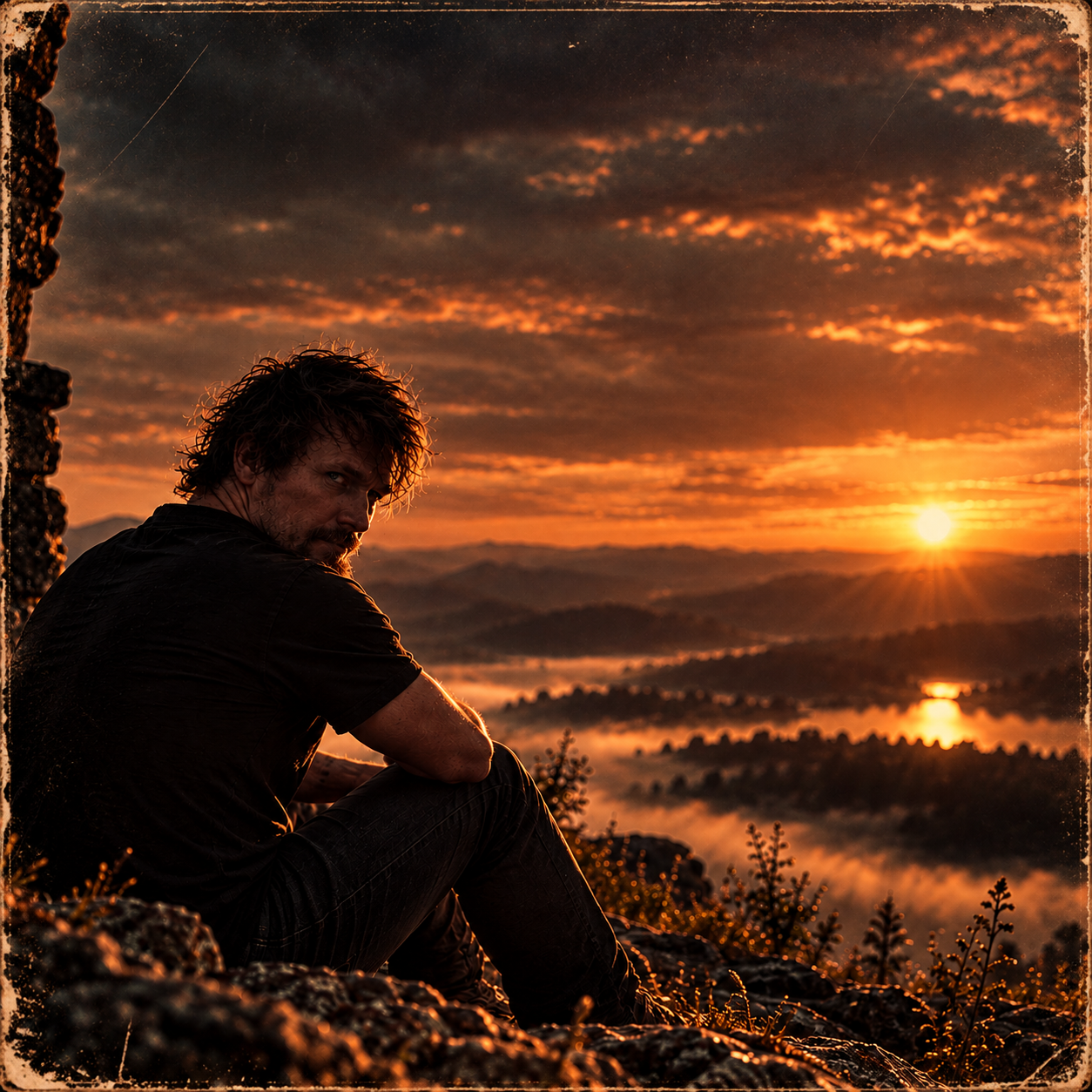
The Man Who Sold His Time
He thought he was selling hours. He never realized what they were worth.
The first time he sold an hour, he was thirty-two. He needed the money, or at least that was what he told himself. The machine stood in a small room with no windows, almost beautiful in its simplicity: a glass screen, a silver button, and a place to rest your hand. The screen asked how much time he wanted to sell. He entered one hour. The machine made a quiet sound, and somewhere inside him, something disappeared. There was no pain, no warning, nothing he could point to and say was missing. He simply walked home with the money. That was enough.
A month later, he returned and sold another hour. Then three. Then ten. Eventually, he stopped counting. There were always reasons to sell a little more: a better apartment, a better car, a better watch. Each purchase made the next hour seem easier to give away. The watch became the most expensive thing he owned. It had no numbers, only a single hand. He liked it that way.
Years passed before he noticed what the hours had been costing him. His daughter grew up while he was working. He was always somewhere else, always busy, always certain there would be time later. One evening, she asked if he was coming home. He looked at the clock. There were six minutes left in the meeting. “Tomorrow,” he said. She said nothing. His father died in winter. He arrived two days later. The house was still warm, his father’s coat hung beside the door, and a cup stood half full on the table, as if someone had only just left. He still had money. He simply didn’t know what to do with it.
When he was sixty-one, he returned to the machine. This time he wasn’t there to sell. He wanted to buy. He entered ten years. The screen went dark, then displayed: “TIME IS NOT FOR SALE.” He laughed, thinking it was a joke. It wasn’t. He came back the next morning, and the morning after that. For six weeks he returned to the same room and stood in front of the same machine. Then, one morning, the screen displayed another message: “YOUR BALANCE IS ZERO.” He looked down at his hands. They were old. He couldn’t remember when that had happened.
That evening, he went home. The house was enormous. There were rooms he had never used, pictures he couldn’t remember taking, and things he had bought simply because he could afford them. On the refrigerator was a child’s drawing. He didn’t remember when his daughter had made it. For the first time in years, there was nowhere he had to be. No meeting. No phone call. No tomorrow that needed planning. Only the clock. He listened to it for a long time and finally understood what he had spent all those years refusing to see. They had told him that time was money. He had believed them. They were right. Just not in the way he thought.
The clock kept running. He didn’t.
The clock kept running.
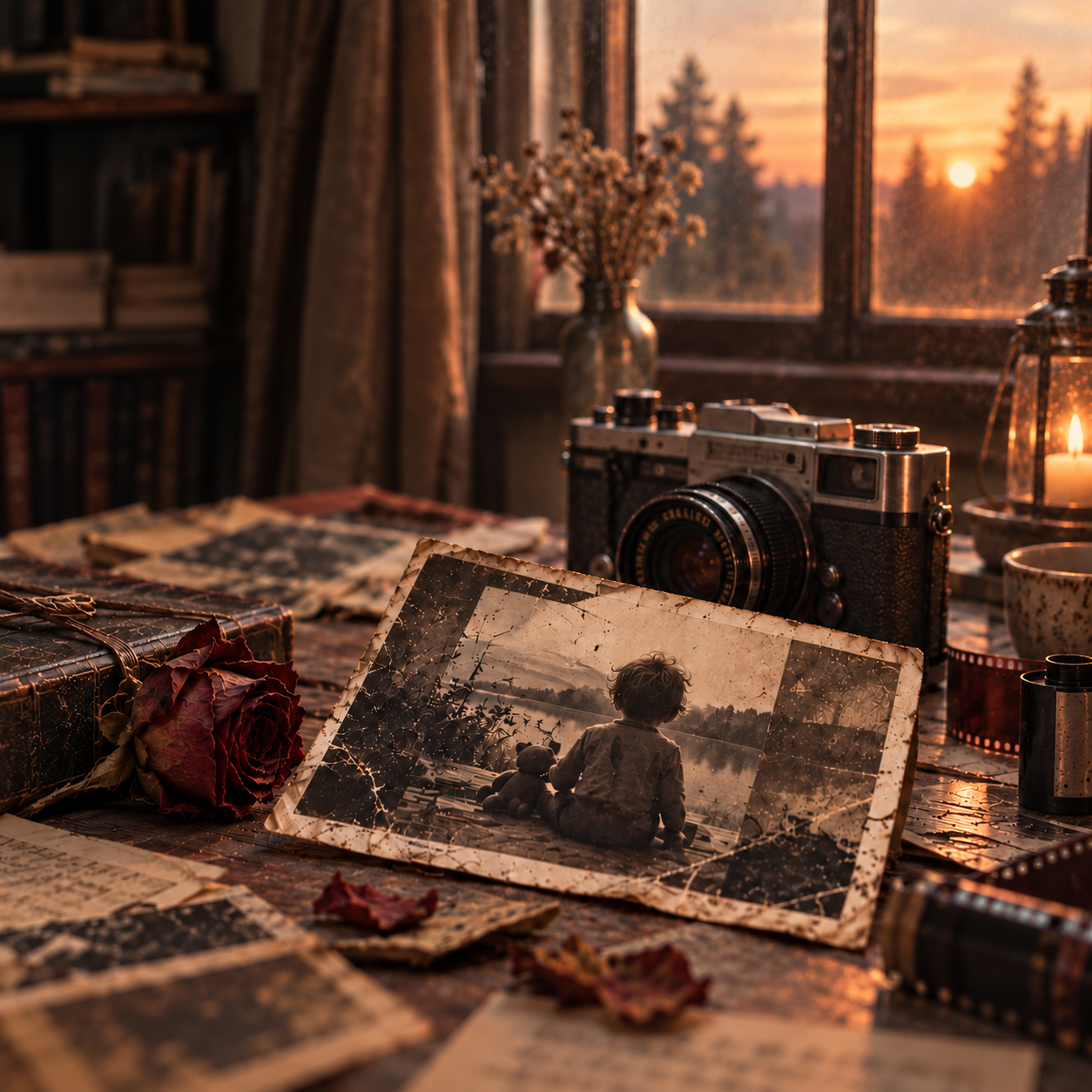
The Last Photograph
Some memories don't disappear. They simply wait until we become quiet enough to find them.
The photograph was already fading. Its corners had curled with time, and the summer trapped inside the paper had begun to lose its color. Someone was laughing in the picture. He couldn’t hear it, of course, but when he looked at the photograph long enough, he could almost imagine the sound. There was a face he almost knew. A place he almost remembered. He stood alone in the dusty room with the window open, surrounded by old wood marked with years and coffee stains. Somewhere in the house, a radio was playing a song without words.
He turned the photograph toward the light. For a moment, the sunlight seemed to know something he didn’t. There was a bicycle, white shoes in the grass, a dog running out of the frame, and a hand reaching toward someone who stood just outside the picture. That was what bothered him most: not what the photograph showed, but what it didn’t. Why couldn’t he remember the rest? He searched the silence around him, but he wasn’t really searching the house. He was searching the silence itself. The floors remembered footsteps, the walls remembered voices, the curtains remembered the wind. But people didn’t. Or perhaps they simply remembered differently.
Behind another photograph, he found something small, almost invisible: a fingerprint. He placed his thumb over it. It fit. For a second, the sensation was strangely unsettling. It felt like somebody else’s hand was resting beneath his own. He looked at the photograph again, searching the face for a name, but there was nothing. Only the feeling that he had known it once.
Evening arrived without asking. The light in the room changed, and so did the photograph. Warm amber slowly turned blue. The faded smile seemed different now, almost familiar—not because he had remembered, but because he had finally stopped trying. Perhaps memories didn’t return when you searched for them. Perhaps they waited for the noise to disappear, waiting until you became quiet enough to hear them.
The photograph never showed what happened next. It never revealed how the story ended, or who had disappeared, or why the memory had become so difficult to reach. It only proved one thing: once, there had been light. He placed the photograph on the table. He didn’t put it away. He left it there for tomorrow, if tomorrow remembered him. The room fell silent, and somewhere, almost too quietly to hear, a camera shutter closed.
Once, there had been light.
The Woman in Room Seventeen
Some promises don't disappear. They wait in empty rooms.
She always arrived at 11:40. No suitcase. No coat. Just a dark red dress and a key in her hand. Room 17. Every night, the same. She never stayed until morning, never said goodbye, and whenever she left, she left the light on behind her. The first time he saw her, he assumed she was waiting for someone. The second time, he thought she might be lost. By the seventh night, he had stopped trying to understand. He simply watched from behind the reception desk, seeing her in the reflection of the old brass mirror as the elevator opened at exactly 11:40.
One night, she came downstairs and stopped directly in front of the desk. “Do you remember me?” she asked. He looked at her. He didn’t. She smiled. “I know.” Then she turned and walked back toward the elevator. He followed her upstairs. The hallway was empty. Room 17 stood open, the light still burning behind the curtain, but she was gone. On the bed lay a photograph of the hotel lobby, the same desk, the same brass mirror—and behind the desk stood a man who looked exactly like him, only twenty years younger. On the back of the photograph was a single word: “Tomorrow.”
He didn’t sleep that night. At 11:40 the following evening, he was waiting. The elevator doors opened and she stepped out in the same dark red dress, wearing the same smile. This time something inside him broke open. He remembered. He had loved her. He had lost her. And twenty years ago, he had promised to wait. He had forgotten the promise. She hadn’t. She held out her hand. He took it. The hotel lights went dark.
In the morning, Room 17 was empty. The key was still lying on the desk. There was no guest registered under her name and no photograph on the bed. Nothing remained to explain what had happened. Only the old brass mirror. In the morning light, a small red mark was almost invisible on its surface, beside two fingerprints, side by side. The room was empty. But for the first time in twenty years, he wasn’t waiting anymore.
She had remembered what he had forgotten.
Midnight on Sunset Avenue
Sometimes you don't need to know where you're going. You just need someone to tell you to drive.
It was midnight on Sunset Avenue when she finally stopped trying to get somewhere. The traffic lights changed from red to gold, the windows were down, and the city smelled of rain and hot asphalt. She had no destination, and for once, that was exactly what she wanted. Then she saw the stranger beneath a broken streetlight. He looked at her as though he already knew where she was going even though she didn’t. He leaned toward the car and simply said, “Drive.” So she did. They passed liquor stores and empty bars, moving through streets lined with places they seemed to remember without explaining why.
They told each other their names, but neither asked whether they were real. When she missed a turn, he laughed. She told him she had meant to do it. He said, “Of course you did.” Neon signs blurred in the rain, and every now and then she caught his reflection in the window. There was something strangely familiar about his face, as if she had known him for years without ever having met him. When he asked where she was going, she looked ahead and answered, “Anywhere.” He watched her for a moment. “Good.” They kept driving. They didn’t talk about tomorrow. They didn’t need to.
At the corner of Sunset and Vine, he asked her to stop. The rain had started again. For a moment they simply sat there, listening to the rain and the city around them. Then he leaned toward her and kissed her once. It felt like a goodbye, although neither of them was willing to call it one. He stepped out and disappeared into the rain. She watched until the darkness swallowed him, then turned the music up and drove on. By the time morning began to appear, there was nothing left beside her but an empty seat.
No number. No address. No promise. Just headlights, an empty seat, and somewhere behind her, midnight on Sunset Avenue.
No number. No address. No promise.
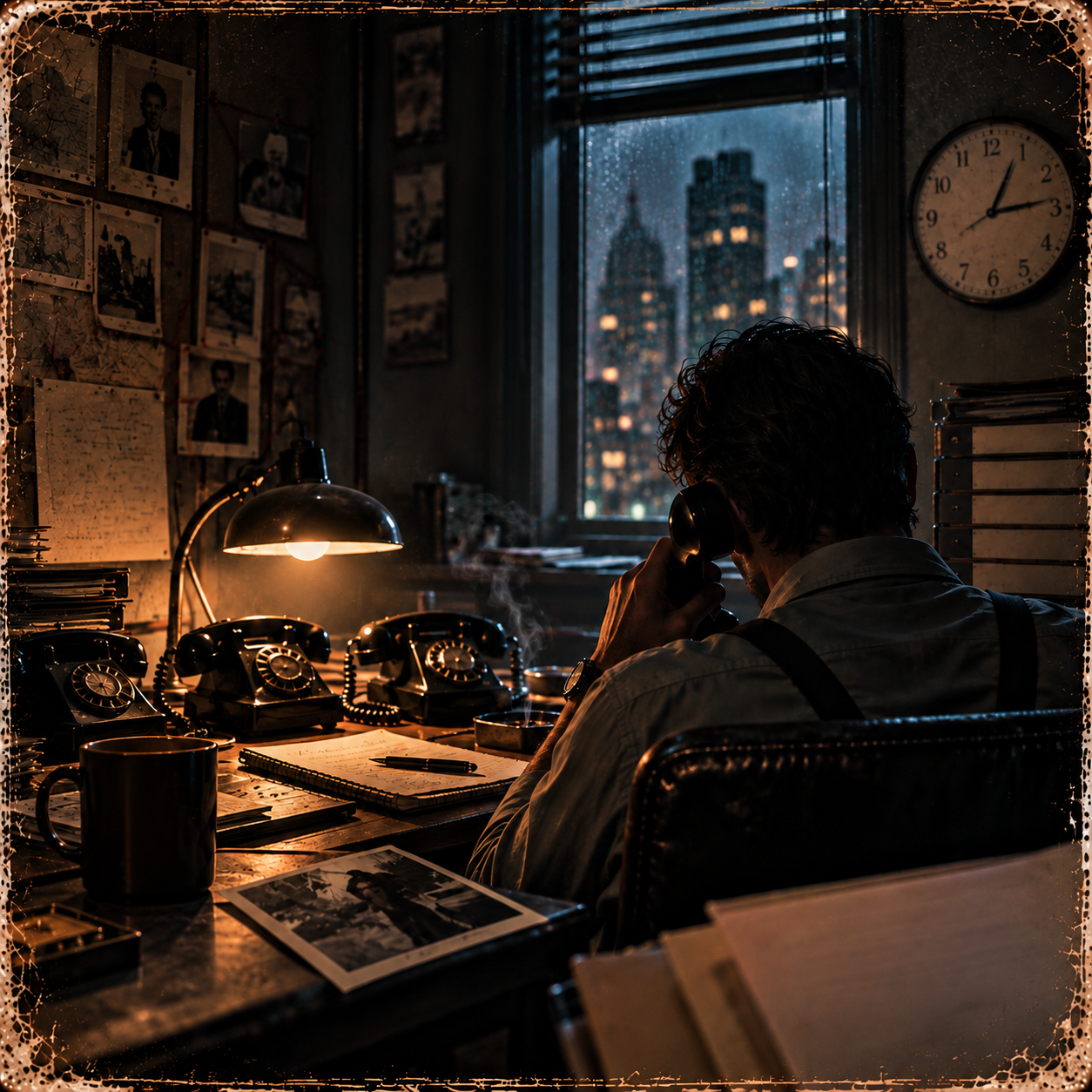
The Man Who Knew Too Much
Some secrets are better left unheard. Once you know them, you can never pretend you don’t.
The first rule was simple: never listen. People talked at night. He worked the fourth floor night shift, three phones on a desk, a parking lot outside the window. One night someone forgot to hang up. He heard names, numbers, a bank, a date. He wrote them down. After that, he started listening every night. There were promises, threats, money and silence, always the same name appearing somewhere in the background. He wrote it down, crossed it out, then wrote it again.
After three weeks, he had a list inside an envelope. Seven people. Seven dates. Seven empty boxes. He recognized six of the names. The seventh date was tomorrow, and beside it was his own name. He didn’t call the police. He didn’t pack a bag. He simply went home, made coffee, turned off the lights and waited.
At 1:13 the phone rang. He didn’t answer. It rang again, then stopped. Three knocks came from the door. He recognized the sound from the recordings, from the voice of the unknown man who had been speaking on the other end of the line. He reached for the phone. A voice came through—his own voice. “Don’t open the door.” He opened it anyway. Nobody was there. On the floor lay an envelope containing a photograph of his desk, taken from the other side. On the back were five words: “You should have stopped listening.”
The next morning, the phones rang. Nobody answered. The following night, someone else sat at the desk. The chair was occupied, the lights were on, and the phones kept ringing. But the man who had listened to everything was gone. He had known too much.
He had known too much.
Velvet Revolver
Some women carry secrets. Some carry guns. She carried both.
She walked into the bar just after midnight wearing a red velvet jacket over a black dress. She had no umbrella, rain still shining on her shoulders, and ordered bourbon neat. A man three seats away watched her for ten minutes. She knew. He bought her a drink. She didn’t touch it. “Be careful who you buy drinks for,” she told him. When she walked outside, he followed. Beneath the hotel lights she lit a cigarette and looked back at him. “You coming?” she asked. “Where?” “Anywhere.”
They walked two blocks. She asked why he had picked her. He told her it was because she looked like a woman who never learned. In the hotel room there were two drinks, a loosened tie, a jacket thrown over a chair. Then she opened a drawer and showed him a gun. “Relax,” she said. “It’s not for you.” She placed the gun on the table beside his phone. “Now we can talk.” That was when he understood that the encounter had never been chance. She had known his name before he entered the bar. She had chosen him deliberately.
At 3:17 she left. The rain had stopped. The gun was gone. So was his phone. He looked into the mirror. Written across the glass were five words: “Next time, buy your own drink.”
Next time, buy your own drink.
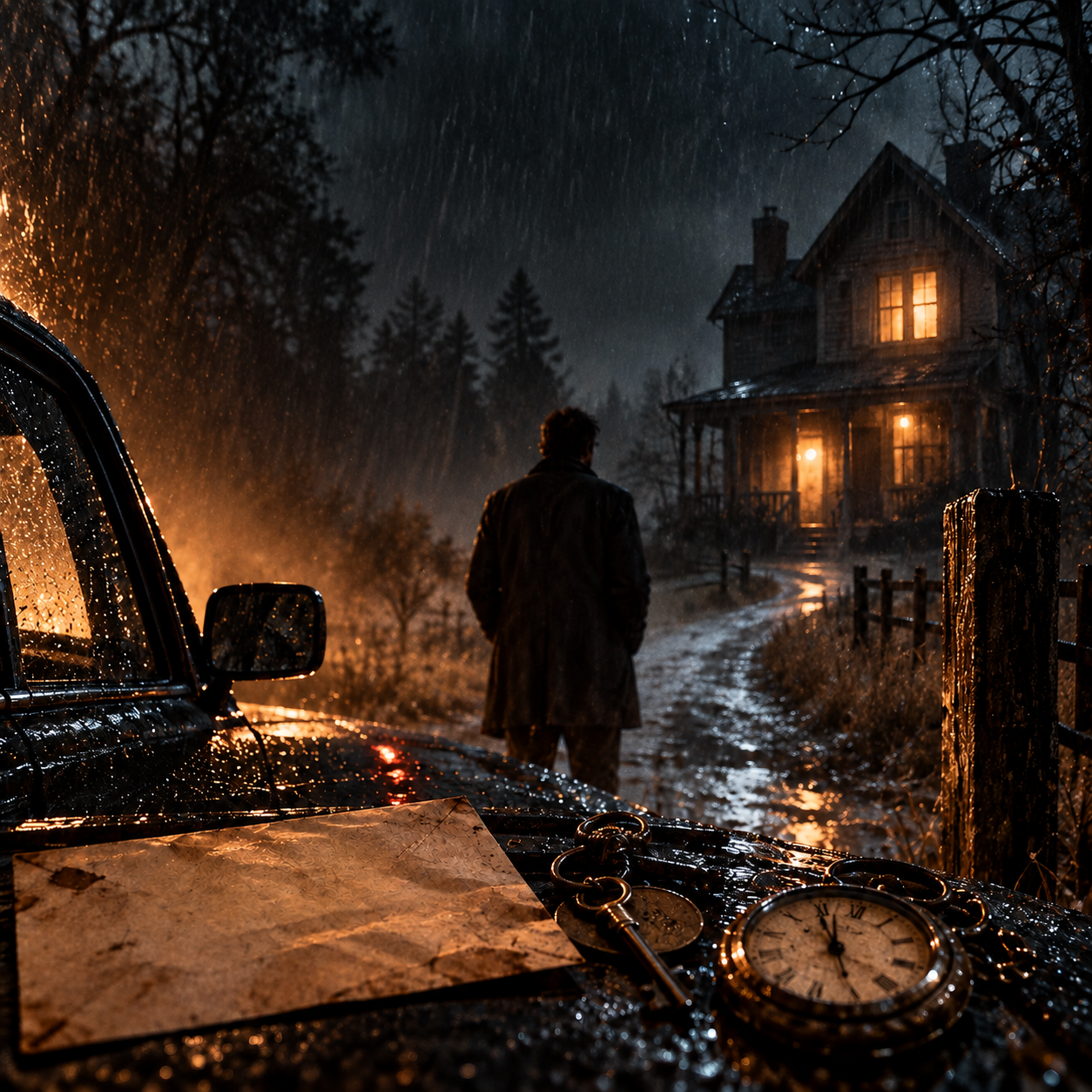
The House at the End of the Road
Some roads don't lead you home. They lead you back to who you were.
The road was empty. No lights, no houses, nothing but rain and the steady sound of tires moving across wet asphalt. Then he saw it: the house at the end of the road. He hadn’t been there for thirty years, or at least that was what he had always believed. The trees had grown taller, the road seemed narrower, but the house looked exactly as it had in his memory. One light was still burning upstairs. He should have kept driving. He didn’t.
The front door was already open. Inside, the hallway smelled of dust and old wood, and on the wall an old clock was ticking with the same slow, familiar rhythm. Tick. Tick. Tick. He knew that sound. He had heard it every night when he was a boy. In the dining room stood a table, and on it lay a letter with his name written across the envelope. The paper had turned yellow with age, but the handwriting was unmistakably his. Every line felt like a door he had once locked from the inside. “I know you’ll come back. I know you’ll forget. But you will remember when you see the house.”
He stopped reading. Suddenly he remembered the night he had spent thirty years trying to turn into a dream: the shouting, the rain, his father leaving, his mother crying behind the kitchen door. And himself standing at the bottom of the stairs, waiting. He had spent thirty years telling himself he had been too young to remember any of it, but the house remembered. The walls remembered. And now, somehow, so did he.
He had driven away from that house, but he had never really left it. He had buried the memory so deeply inside himself that eventually he had mistaken forgetting for freedom. Then the clock stopped. The hands rested at 12:17—the exact time he had walked out thirty years earlier. He looked toward the stairs and saw a boy standing there, small and barefoot, watching him from the shadows. The boy looked afraid. He looked familiar.
And then he understood. The boy wasn’t waiting for him to come back. He was waiting for someone to finally remember him. He left the letter on the table. He didn’t take it with him. Outside, the rain had stopped, and behind him the house went dark. For the first time in thirty years, he stopped running.
For the first time in thirty years, he stopped running.
A Stranger Called June
Some people enter our lives as strangers. Others arrive carrying the memory of who we used to be.
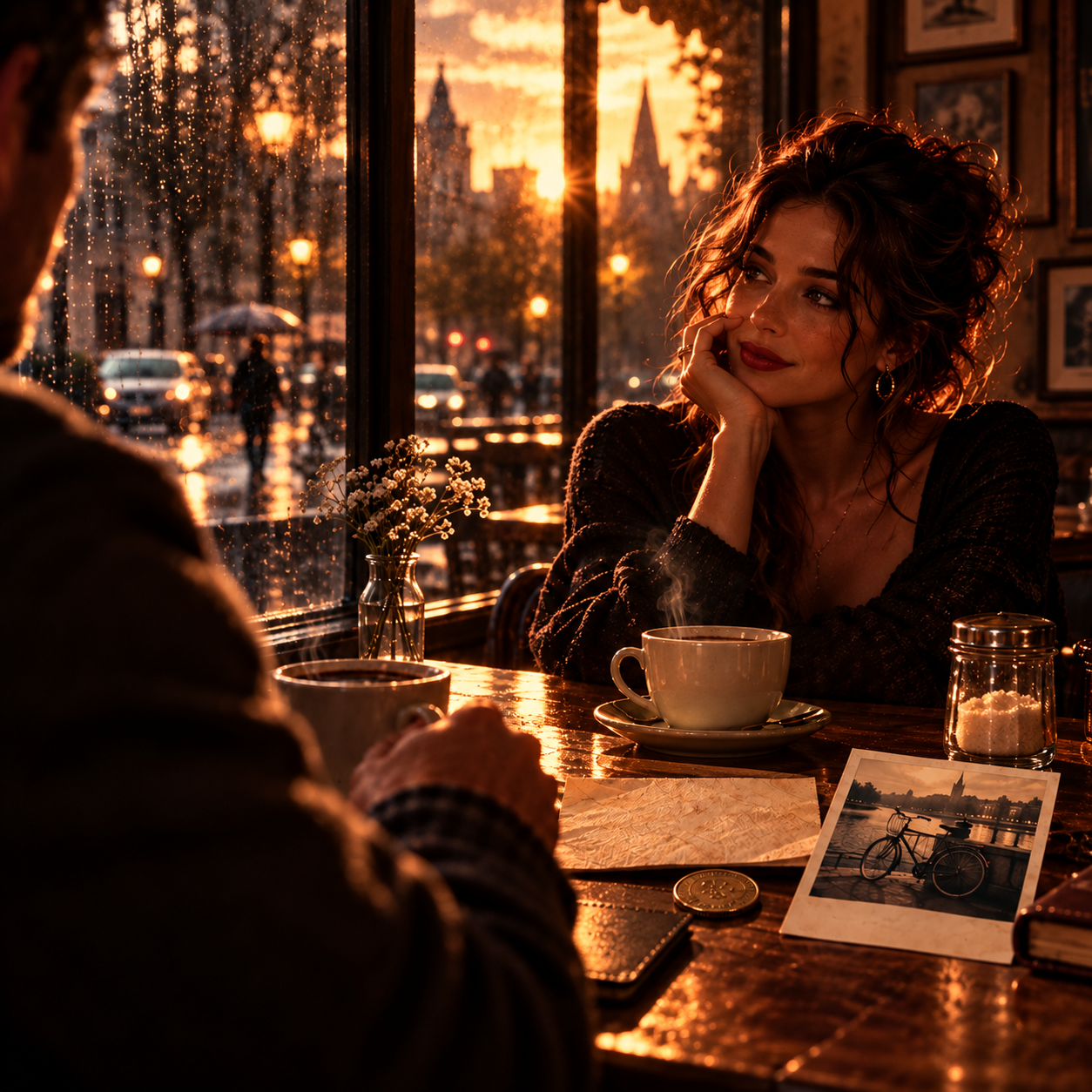
It was eight fifteen on a Sunday morning. The same table, the same coffee, the same quiet beginning to a day that had never seemed to hold any surprises. Then she sat down across from him and said her name was June. There was something about the way she said it, as though they had met before. He smiled and told her he was sure he would remember. She laughed, then asked about the scar above his left hand. He hadn’t told anyone where it came from. “Bad summer,” she said. “Twenty years ago.” She knew the little things, too—the song he used to play when he couldn’t sleep, the blue bicycle he had left behind, the woman he had never called again. She remembered his mother singing in the kitchen and even the way he used to dance when nobody was watching.
The following Sunday she was there again, at the same table, with two coffees waiting between them. This time she brought him a coin from a city he had never visited. “Keep it,” she said. “You’ll understand later.” When he asked where she lived, she pointed toward the window. “Somewhere you stopped looking.” Weeks became months. Sometimes they talked, sometimes they didn’t. They watched the rain against the glass, shared quiet mornings and ordinary afternoons, and she never asked what he was afraid of because she already knew.
One morning he finally asked her. “June, how do you know me?” She looked at him for a very long time before answering. “I don’t know you. I remember you.” The words stayed between them. She took his hand and told him he wasn’t the man he had once thought he would become, but that he still had time. She knew every road he had been too afraid to see, every version of himself he had left behind. For the first time, he understood that perhaps knowing who you were wasn’t the same as being trapped by it.
The next Sunday he came alone. Her chair was empty. On the table lay the old coin, and beneath it a photograph: a younger man beside a blue bicycle on a summer day. On the back, written in handwriting he recognized, were the words: “Don’t become someone you wouldn’t want to meet.” He looked at the empty chair for a long moment and smiled. “Goodbye, June.” Then he left the coin where it was and walked out into the morning.
You’re not the man you thought you’d be. But you still have time.
The Lucky Ones
They called him lucky. He spent years believing them, until he realized that having everything was not the same as having someone.
They said he was lucky. Everybody did. He got the job, the house, the girl. He was promoted before he turned thirty and bought a house with a garden and a room he never used. For a while, his friends came by, then less often, and eventually not at all. He was always working, always building something, always telling himself that there would be time later. Maybe next year. Then, on a Thursday night, he met her. She laughed at all his bad jokes, and for a few years they were good together. But slowly the dinners became colder, the weekends became longer, and eventually she stopped waiting for him to come home. One day she left a note on the kitchen table: “I got tired of being alone with someone who was never here.”
They had called them the lucky ones. The people who got everything—the money, the house, the second chance. Maybe they had been right. Maybe luck was simply another word for the things we lose without noticing. Then the accident happened on a Sunday morning. Rain on the highway. A truck. A broken windshield. Three seconds he would remember for the rest of his life. He walked away. Everyone told him how lucky he was. He never told them about the man who didn’t.
Years passed. The house became bigger, the garden grew wild, and he had almost everything he had once wanted. Except someone to share it with. One evening he sat by the window and watched a couple across the street. They argued, then laughed, then carried groceries inside. Nothing remarkable. Nothing anyone would write a story about. Just two people living an ordinary life together. He watched them through the glass and, for the first time, wondered whether that was the lucky part. Maybe the lucky ones weren’t the people who got everything. Maybe they were the people who still had someone to call. Maybe they were the ones who still had time to lose.
The next morning he sold the house. He kept one chair, one coffee cup, one photograph, and the note she had left years before. He read it again and then smiled. Not because it didn’t hurt. Because it still did. He stood there for a while, holding the paper in his hands, and understood that pain could sometimes be proof that something had mattered. Maybe luck had never been about what stayed. Maybe it was about having had something worth losing—and realizing, before it was too late, that there was still time.
Maybe luck had never been about what stayed.
Three Cigarettes Later
Some memories don’t come back. They wait.
The bar was almost empty. Two men sat at the corner, a bartender polished the same glass for the third time, and she sat alone with a cigarette between her fingers. Across the room, a man looked at her—not staring, just looking, as if he were waiting for something. She looked away, then back. He was still there. She didn’t know his name. At least, that was what she told herself. She lit another cigarette and watched the smoke rise toward the ceiling.
The first cigarette carried her back to a railway station in the rain. A suitcase she couldn’t carry. A red dress beneath a yellow light. Someone saying, “Don’t go.” She remembered the voice, but not the face. The second cigarette brought back a hotel room, curtains moving in an open window, two glasses on a table, one untouched. A door closing. Then silence. She couldn’t remember who had left. Only that she had stayed. Some memories didn’t come back. They waited.
The man eventually stood, put some money on the bar and walked past her without saying a word. At the door he stopped for a second and looked back, then disappeared into the night. She waited before noticing something on the table: a photograph. She turned it over after lighting her third cigarette. Two people stood at a railway station in the rain. A suitcase. A red dress. And him beside her. On the back were five words: “You said you’d forget me.” She remembered. Not everything. Just enough.
The bartender was still polishing his glass. The other two men were gone. She put the photograph in her pocket, lit another cigarette and waited for morning. Three cigarettes later, she remembered his face. Three cigarettes later, she remembered that place. Maybe they had been strangers. Maybe that had been the mistake. And finally she remembered why she had stayed.
Maybe they had been strangers. Maybe that had been the mistake.
The Boy Who Never Left
Growing older doesn't always mean leaving the past behind. Sometimes it means finding the part of yourself you thought you had lost.
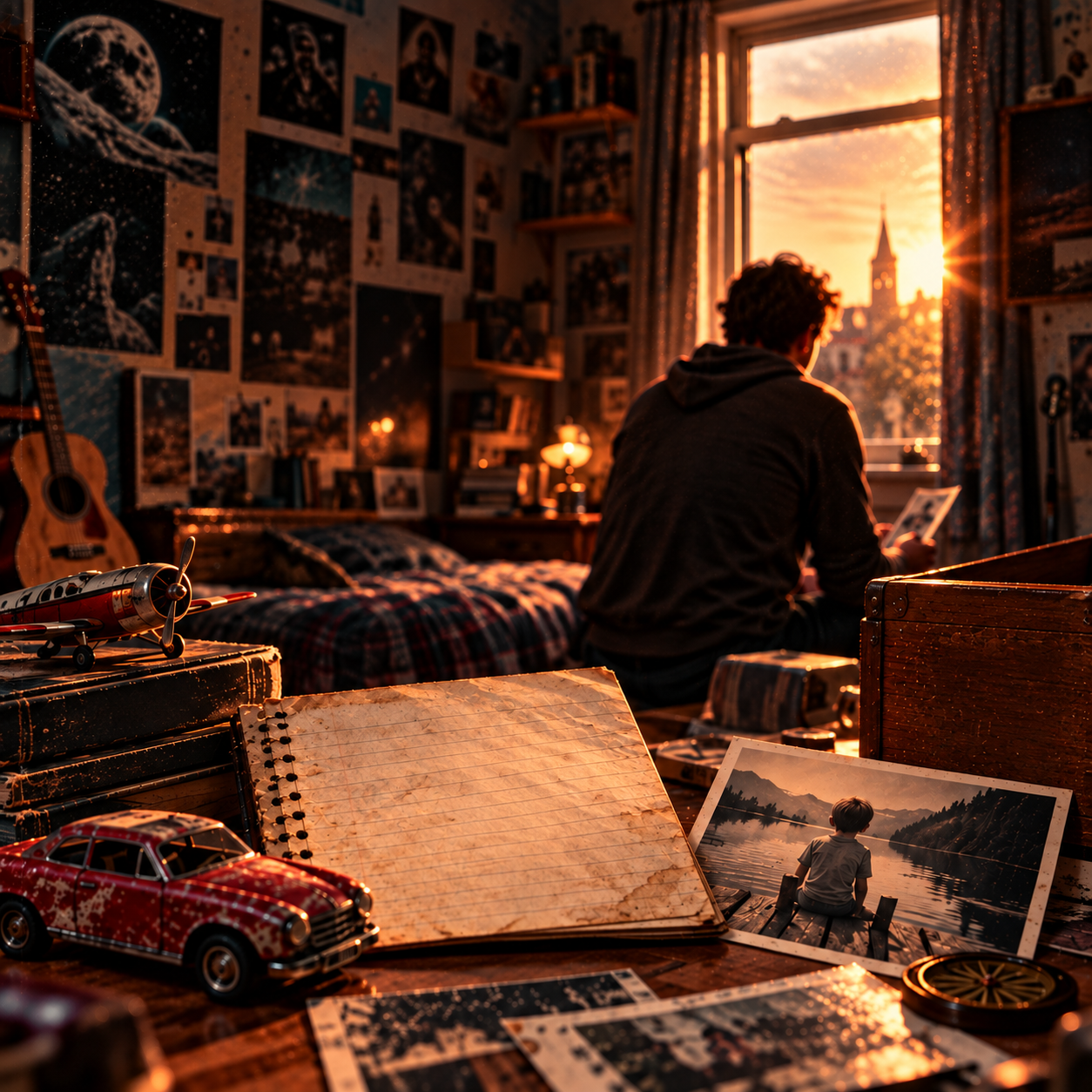
The house was empty. His father had been gone for three days, and there wasn’t much left to take—only a few clothes, some books, old photographs, and the room at the end of the hallway. He hadn’t been inside that room since he was seventeen. The wallpaper was still blue. There was a crack above the window, exactly where he remembered it, and beneath the bed he found a wooden box he had completely forgotten. Inside were a school notebook, a broken toy car, a photograph, and a letter. His name was written on the envelope, and underneath it, in crooked handwriting, were the words: “Dear future me.”
He opened it and met the boy he had once been. The boy wanted to be everything: a pilot, a musician, a man who would travel the world. He wanted a red car, a dog, a house by the sea. He wanted to stay awake all night and watch the stars. Then he reached one sentence that made him stop: “Please don’t become boring.” He laughed, then cried, and wasn’t sure which one had come first. Sitting there, he suddenly understood that the boy who never left was still somewhere inside him, still waiting by the window, still wondering what had happened to all those things they had once believed were possible.
He sat down on the old bed, and for a moment he was seventeen again. There was no mortgage, no meetings, no deadlines, no reason to be somewhere else. There was only a boy who believed there would always be time. Then he noticed something written on the back of the letter. The handwriting was different. It was his father’s. “I knew you’d forget him. I kept this room so you’d have somewhere to find him.” He read the words twice and then folded the paper very carefully. Outside, evening light filled the hallway, and dust moved slowly through the golden air. For the first time, the house didn’t feel empty.
He looked at the photograph. The boy was smiling, and somehow he recognized him. He took the photograph and left everything else behind. Before closing the door, he looked back into the room. “I haven’t forgotten you,” he said quietly. Then, after a long pause, he added, “I just got lost.” Maybe growing older didn’t mean saying goodbye to the person you once were. Maybe what we really lose is simply the courage to try again. The boy who never left had been waiting all this time—not for the past to return, but for him to finally remember where he had left himself.
He turned off the light, closed the door, and walked outside with the photograph in his pocket. For once, he wasn’t going anywhere.
For once, he wasn’t going anywhere.

When the City Falls Asleep
When the city falls silent, there is no one left to perform for. For a few hours, we become the people we were before the world told us who to be.
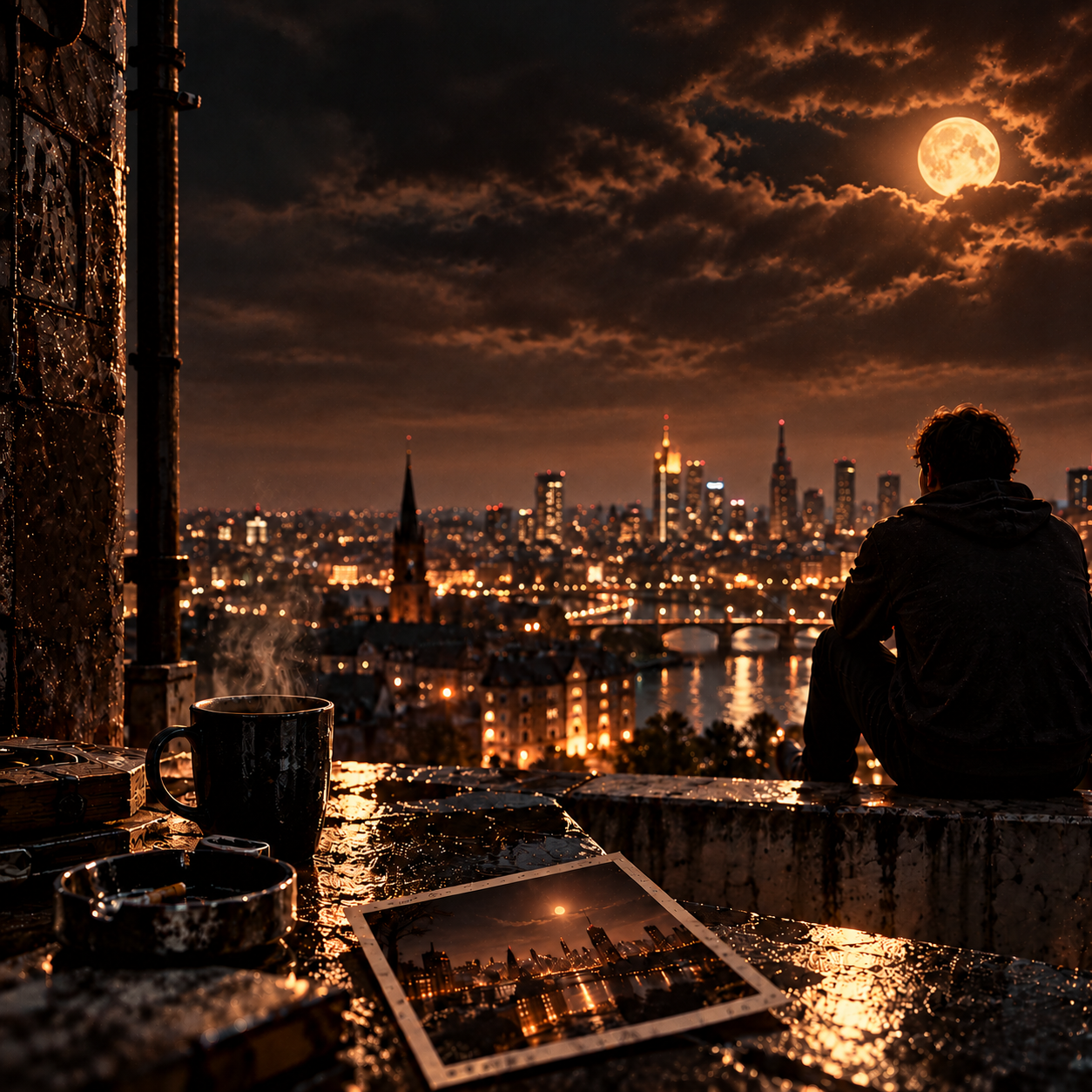
There is a moment every night when the city stops pretending. The last train leaves, the bars grow quiet, the traffic disappears, and all the windows begin to look the same. Somewhere, a man turns off a light. Somewhere, a woman puts a photograph back into a drawer. Someone drives home with the radio turned low, while someone else sits alone in a room they thought they had forgotten. Nobody sees them. And perhaps that’s the beautiful part. The city keeps a thousand secrets behind hotel doors, inside apartments, beneath streetlights and around kitchen tables. People leave. People stay. People remember. People forget. Sometimes they don’t even know which one they have done.
When the city falls asleep, we become who we really are. No one is watching. No one is asking questions. No one is telling us who we should be. The lights are still on somewhere, and maybe that’s enough. A photograph lies beside a bed. A cigarette burns down in an ashtray. A letter waits on an empty table. Somewhere, a clock keeps ticking in a house at the end of the road. A woman looks through a café window. A man drives until morning. And somewhere inside an old room, a boy is still standing where he was left. Nobody knows. Maybe they don’t have to.
Because every life has a room no one else can enter. A place where old names remain, where forgotten voices can still sound familiar, where the person we used to be is waiting quietly for us to come home. Maybe we’re all just passing through. Maybe we’re all a little lost. Maybe the night isn’t empty at all. Maybe it’s listening. And when the city falls asleep, all the things we never said are still somewhere in the dark—every broken heart, every open door, every life that left a mark.
The first light will come soon. The trains will start. The doors will open. People will go to work and put their faces on again, and the city will forget the night. But for a few more minutes, nothing has to be fixed. Nothing has to be explained. We can simply be here. We can let the morning wait and allow the world to come back later. For tonight, we are still here.
Somewhere, a clock is ticking. Somewhere, a train is leaving. Somewhere, someone is finally going home. And somewhere, a boy who never left is still smiling. Goodnight.
For tonight, we are still here.
Visuals
Films, fragments
and stills.
A visual archive from the world of GRIMM. Some moments move. Some remain still.
The Last Photograph
Some memories don’t disappear. They simply wait until we become quiet enough to find them.
About GRIMM
Stories become sound.
Not every story needs an answer. Some simply need a place to remain.
GRIMM is an electronic storytelling project between spoken word, ambient music and cinematic soundscapes. At its center are stories about time, memory, loss, closeness and what remains after a moment has passed.
The aim is not to explain every story completely. A photograph, a voice, an empty room or a familiar place can sometimes say more than an entire biography. GRIMM deliberately leaves space for those things left unsaid.
Music is not simply a soundtrack. It is part of the narrative. Sound, language and image meet to create spaces where memories can find a meaning of their own.