
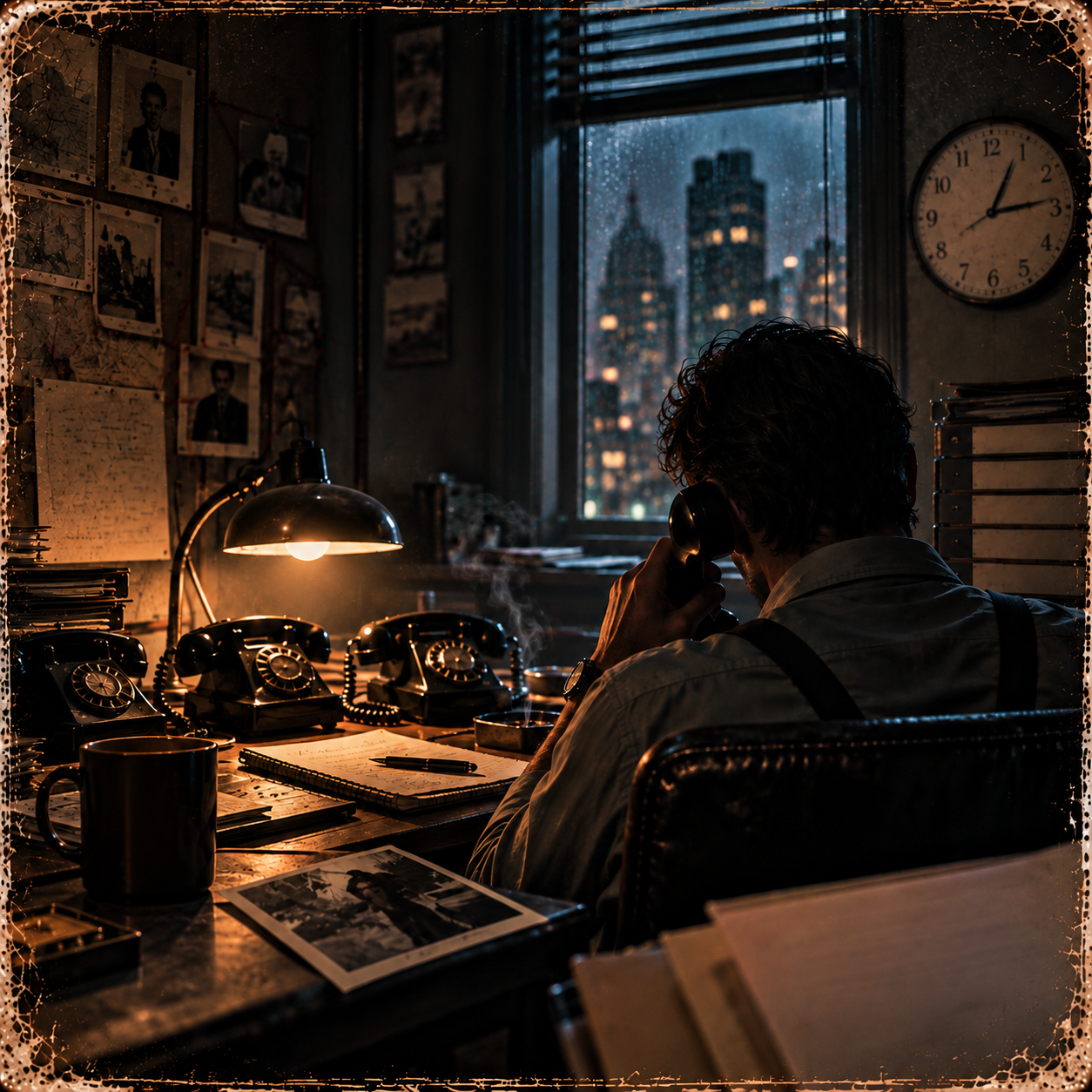
The first rule was simple: never listen. People talked at night. He worked the fourth floor night shift, three phones on a desk, a parking lot outside the window. One night someone forgot to hang up. He heard names, numbers, a bank, a date. He wrote them down. After that, he started listening every night. There were promises, threats, money and silence, always the same name appearing somewhere in the background. He wrote it down, crossed it out, then wrote it again.
After three weeks, he had a list inside an envelope. Seven people. Seven dates. Seven empty boxes. He recognized six of the names. The seventh date was tomorrow, and beside it was his own name. He didn’t call the police. He didn’t pack a bag. He simply went home, made coffee, turned off the lights and waited.
At 1:13 the phone rang. He didn’t answer. It rang again, then stopped. Three knocks came from the door. He recognized the sound from the recordings, from the voice of the unknown man who had been speaking on the other end of the line. He reached for the phone. A voice came through—his own voice. “Don’t open the door.” He opened it anyway. Nobody was there. On the floor lay an envelope containing a photograph of his desk, taken from the other side. On the back were five words: “You should have stopped listening.”
The next morning, the phones rang. Nobody answered. The following night, someone else sat at the desk. The chair was occupied, the lights were on, and the phones kept ringing. But the man who had listened to everything was gone. He had known too much.
He had known too much.